
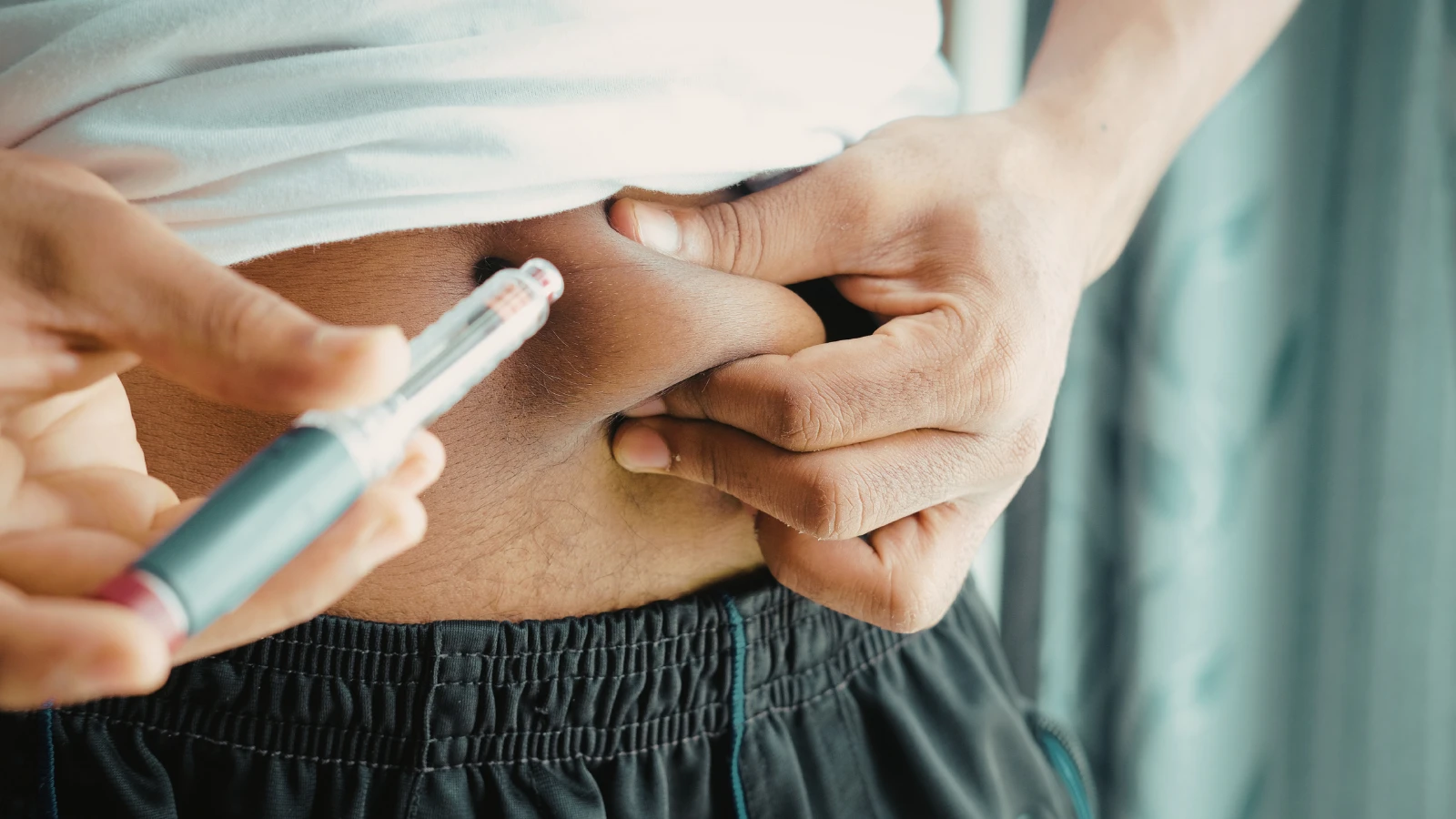
CagriSema: The Once-Weekly Injection That Targets Two Hunger Signals at Once
If you've used or looked into Wegovy, you already know how effective modern weight loss injections can be. Wegovy has helped hundreds of thousands of people in the UK lose significant amounts of weight by mimicking a natural gut hormone that tells your brain you're full. But what if there was a way to make that effect even stronger — not by increasing the dose, but by adding a second hunger signal on top?
That's the idea behind CagriSema, a new once-weekly injection being developed by Novo Nordisk, the same company that makes Wegovy and Ozempic. CagriSema combines the active ingredient in Wegovy with a second drug that targets a completely different fullness pathway in the brain. The result, based on two major clinical trials published in the New England Journal of Medicine, is the most substantial weight loss seen to date with a combination injection.
Here's what we know so far, and what it could mean for people in the UK.
How Does CagriSema Work?
To understand why CagriSema is generating so much interest, it helps to know how your body manages feelings of hunger and fullness. Your body doesn't rely on just one signal to tell you when to stop eating — it uses several, controlled by different hormones working through different pathways in the brain.
The first pathway: GLP-1. After you eat, your gut releases a hormone called GLP-1. This signals to your brain that food is arriving, slows down how quickly your stomach empties, and helps regulate blood sugar. Wegovy works by mimicking this hormone with a drug called semaglutide (2.4 mg, injected once a week). It's effective — but it's only targeting one of the body's hunger signals.
The second pathway: Amylin. When you eat, your pancreas releases another hormone called amylin alongside insulin. Amylin acts on different areas of the brain — particularly the parts involved in the feeling of satisfaction and fullness you get during and after a meal. It's a distinct "I've had enough" signal that works separately from GLP-1.
CagriSema is a single injection pen that delivers both semaglutide 2.4 mg (the GLP-1 component, identical to Wegovy) and cagrilintide 2.4 mg (a long-acting version of amylin). By targeting both pathways at once, the two drugs work together to reduce appetite more effectively than either one could alone. Researchers believe this is because they act on different parts of the brain involved in hunger — the hypothalamus, the hindbrain, and the septum — creating a complementary effect rather than simply doubling up on the same signal.
In simple terms: if GLP-1 tells your brain "you're getting full," amylin adds "and you're satisfied." Together, they make it easier to eat less without feeling like you're fighting constant hunger.
What Do the Clinical Trials Show?
CagriSema has been tested in two large Phase 3 clinical trials, both published in the New England Journal of Medicine in June 2025 and presented at the American Diabetes Association's Scientific Sessions in Chicago.
Weight Loss in People Without Diabetes (REDEFINE 1)
The REDEFINE 1 trial was the larger of the two studies. It enrolled 3,417 adults who had obesity or were overweight with at least one weight-related health condition (such as high blood pressure or heart disease), but who did not have type 2 diabetes. Participants were randomly assigned to receive one of four treatments, injected once a week for 68 weeks (roughly 16 months):
- CagriSema (semaglutide + cagrilintide)
- Semaglutide alone (the same drug as Wegovy)
- Cagrilintide alone
- Placebo (an inactive injection)
The average weight loss results at 68 weeks were:
- CagriSema: 20.4%
- Semaglutide alone: 14.9%
- Cagrilintide alone: 11.5%
- Placebo: 3.0%
That means CagriSema produced roughly a third more weight loss than semaglutide (Wegovy) on its own. To put this into real terms, for someone weighing 17 stone (about 107 kg, which was close to the average starting weight in the trial), a 20.4% loss translates to approximately 3 stone 6 lbs (around 22 kg).
Among participants who took every dose as directed throughout the full 68 weeks, the results were even more striking. Average weight loss rose to 22.7%, with 60% of adherent participants losing at least 20% of their body weight, 40% losing at least 25%, and nearly one in four (23%) losing 30% or more. Over half of CagriSema-treated participants achieved a BMI below 30 — effectively moving out of the clinical definition of obesity.
Weight Loss in People With Type 2 Diabetes (REDEFINE 2)
Weight loss is generally harder to achieve for people living with type 2 diabetes, so a separate trial was conducted specifically for this group. REDEFINE 2 enrolled 1,206 adults across 12 countries, all of whom had both obesity (or overweight) and type 2 diabetes.
The results at 68 weeks showed:
- CagriSema: 13.7% mean weight loss
- Placebo: 3.4%
Among those who adhered fully to treatment, weight loss reached 15.7% with CagriSema versus 3.1% with placebo. Over 83% of CagriSema participants lost at least 5% of their body weight, and nearly a quarter lost 20% or more.
Crucially for people with diabetes, blood sugar control also improved dramatically. Almost three-quarters (73.5%) of participants on CagriSema achieved an HbA1c of 6.5% or below — a level that's considered well-controlled — compared with just 15.9% on placebo. This dual benefit of significant weight loss alongside meaningful blood sugar improvement is exactly what the combination therapy was designed to achieve.
What About Side Effects?
The side effect profile of CagriSema is very similar to what people already experience with Wegovy and other GLP-1-based treatments. The most common side effects in both REDEFINE trials were digestive:
- Nausea — the most frequent, particularly during the early weeks
- Vomiting
- Diarrhoea
- Constipation
These were mostly mild to moderate and tended to settle as the body adjusted, particularly once the dose reached its maintenance level. In REDEFINE 1, around 80% of CagriSema participants reported at least one digestive side effect over the 68-week period, compared with 40% on placebo. This sounds high, but it's important to note that many of these were brief episodes of mild nausea rather than ongoing problems.
Reassuringly, the rate of people who actually stopped taking CagriSema because of side effects was low — in the single digits (approximately 6%) across both trials, compared with about 3.7% on placebo. The investigators noted that flexible dosing — where doctors could keep patients on a slightly lower dose if needed — helped manage tolerability without sacrificing results.
No new or unexpected safety concerns were identified beyond what is already known for the GLP-1 class.
Are There Additional Health Benefits?
Yes. Beyond weight loss itself, CagriSema demonstrated improvements in several markers that are important for long-term health:
- Blood pressure: Systolic blood pressure (the top number) was reduced by approximately 10.9 mmHg with CagriSema, compared with 8.8 mmHg with semaglutide alone. This is a clinically meaningful difference, particularly for people whose obesity is contributing to high blood pressure.
- Blood sugar control: As noted above, the improvements in HbA1c in people with type 2 diabetes were substantial.
- Lipid levels: Improvements in cholesterol and other blood fats were also observed.
An important note: there are no completed cardiovascular outcomes trials for CagriSema yet — the kind of large, long-term studies that measure whether a drug actually reduces heart attacks and strokes. However, REDEFINE 3, a dedicated cardiovascular outcomes trial, is currently underway. There is also a head-to-head trial (REDEFINE 4) comparing CagriSema directly against tirzepatide (the active ingredient in Mounjaro/Zepbound), which will give a clearer picture of how it stacks up against the competition.
When Will CagriSema Be Available in the UK?
This is where it's important to manage expectations. Novo Nordisk submitted CagriSema for approval to the US Food and Drug Administration (FDA) in December 2025, making it the first amylin-based combination therapy ever submitted for obesity treatment. However, CagriSema is not approved or available in the UK at this time.
For a drug to become available here, it needs to go through the UK's own regulatory process. The MHRA (Medicines and Healthcare products Regulatory Agency) must grant a licence, and NICE (the National Institute for Health and Care Excellence) would typically assess whether it should be available on the NHS. Given that Novo Nordisk has indicated global regulatory filings are planned, and considering the precedent set by Wegovy's UK approval pathway, a realistic estimate for UK availability is around 2027 — though this could shift depending on how the regulatory process unfolds.
Until CagriSema is officially licensed in the UK, it is not legally available here. We strongly advise against purchasing any unlicensed weight loss medications from overseas or online sources, as these products are unregulated and could pose serious health risks.
CagriSema represents a meaningful step forward in obesity treatment. By combining two well-understood hormonal pathways in a single weekly injection, it has produced weight loss results that go meaningfully beyond what current treatments like Wegovy can achieve alone — with a side effect profile that's familiar, manageable, and well-tolerated by the vast majority of people in trials.
For people who have tried GLP-1 treatments and felt they needed more, or for those who are managing both obesity and type 2 diabetes, CagriSema could be an important future option. We'll be following the UK regulatory process closely and will share updates as soon as they're available.
If you'd like to discuss the weight loss treatments that are currently available in the UK, our pharmacy team is here to help.
Related Blog
Wegovy vs Mounjaro: Which Weight Loss Injection Is Better?
May 26, 2026 by Sehar Shahid
Main
A New Weight Loss Pill You Don't Have to Take on an Empty Stomach
May 5, 2026 by Sehar Shahid
Main